Written by Mihai Pătru, Executive Director, Blue Zones Project Palm Springs
For decades, economic development has focused on attracting new businesses, creating jobs, building infrastructure, and investing in workforce development. Those priorities remain essential, but a new economic reality is emerging. Increasingly, people are choosing where they want to live before they decide where they want to work.
Recent research reflects this shift. A Fast Company article reported that 55% of the American workers considering relocating abroad identified quality of life as one of their primary motivations. While the focus is on international relocation, it highlights a broader trend: people are making decisions about where to live based not only on economic opportunity but also on the opportunity to live well.
They're looking for communities that offer more than professional opportunities. They want places where they can enjoy a healthier lifestyle, spend more time outdoors, connect with others, support local businesses, and find a greater sense of purpose and balance. Quality of life is no longer simply an outcome of economic prosperity—it is increasingly becoming one of its most powerful drivers.
Palm Springs has always been uniquely positioned to lead this shift. People have long been drawn here by the sunshine, spectacular mountain views, year-round outdoor recreation, arts and culture, world-class hospitality, and entrepreneurial spirit. But increasingly, they are choosing Palm Springs for something less tangible—and perhaps even more valuable: the opportunity to live well.
That represents far more than a lifestyle trend. It represents an economic opportunity.
Why Quality of Life Is Driving Economic Growth
As Blue Zones Project Palm Springs enters its second year, I believe we have an opportunity to intentionally build on what already makes our community special and position Palm Springs as a model for what a modern well-being economy can look like.
Economic prosperity and human well-being are not competing priorities; they reinforce one another. Communities where people are healthier, more connected, and more engaged are also communities that attract talent, foster innovation, support entrepreneurship, and build long-term economic resilience.
In many ways, Palm Springs already has the ingredients of a well-being economy.
What makes our community exceptional isn't just our natural beauty. It's the network of local businesses, nonprofits, healthcare providers, schools, neighborhood organizations, and civic leaders that shape everyday life. Together, they influence how we eat, move, connect, learn, work, and celebrate. They create the experiences that make people fall in love with Palm Springs—not just as a place to visit, but as a place to call home.
A New Model for Economic Development
This is where Blue Zones Project Palm Springs comes in.
Blue Zones Project is often described as a community well-being initiative, but I increasingly see it as an economic development strategy. Our work isn't about asking people to make healthier choices through willpower alone. It's about partnering with local organizations to build the infrastructure required to create environments where the healthy choice becomes the easy choice.
When healthy living becomes woven into everyday life, communities become more attractive to residents, new workforce, entrepreneurs, employers, investors, and visitors alike.
The Infrastructure Behind Community Well-Being
When we think about infrastructure, we usually picture roads, airports, utilities, or broadband. Those investments are essential, but they're only part of what makes a community thrive.
The other infrastructure is built every day by local entrepreneurs, for profit and nonprofit alike.
They're the restaurants making healthy, delicious food accessible. They're the fitness studios where movement becomes a habit instead of a chore. They're the childcare centers and after-school programs helping children build healthy routines. They're the healthcare providers emphasizing prevention and whole-person care. They're the cafés, galleries, bookstores, salons, entertainment venues, and gathering places where neighbors meet, friendships begin, and community comes alive.
Blue Zones Project Palm Springs works alongside these businesses to strengthen that role.
Local Businesses as Catalysts for Change
Consider The Sukha Life, which partnered with Blue Zones Project Palm Springs to pilot Live Long, Live Easy, an innovative series designed by Blue Zones Ambassador Lisa Botts and centered on movement, stress reduction, purpose, and connection. More than a wellness program, for 10 weeks, it has become a place where people build relationships, discover community, and return because they feel a genuine sense of belonging. In the process, Sukha Life has strengthened its role as a trusted community destination while continuing to grow as a small business.
At Strong Republic Personal Training – a soon to become a Blue Zones Project partnering entity, fitness is about much more than exercise. Members encourage one another, celebrate milestones together, and build friendships that extend beyond the gym. The result is healthier individuals, a stronger community, and a business built on trust, accountability, and long-term relationships.
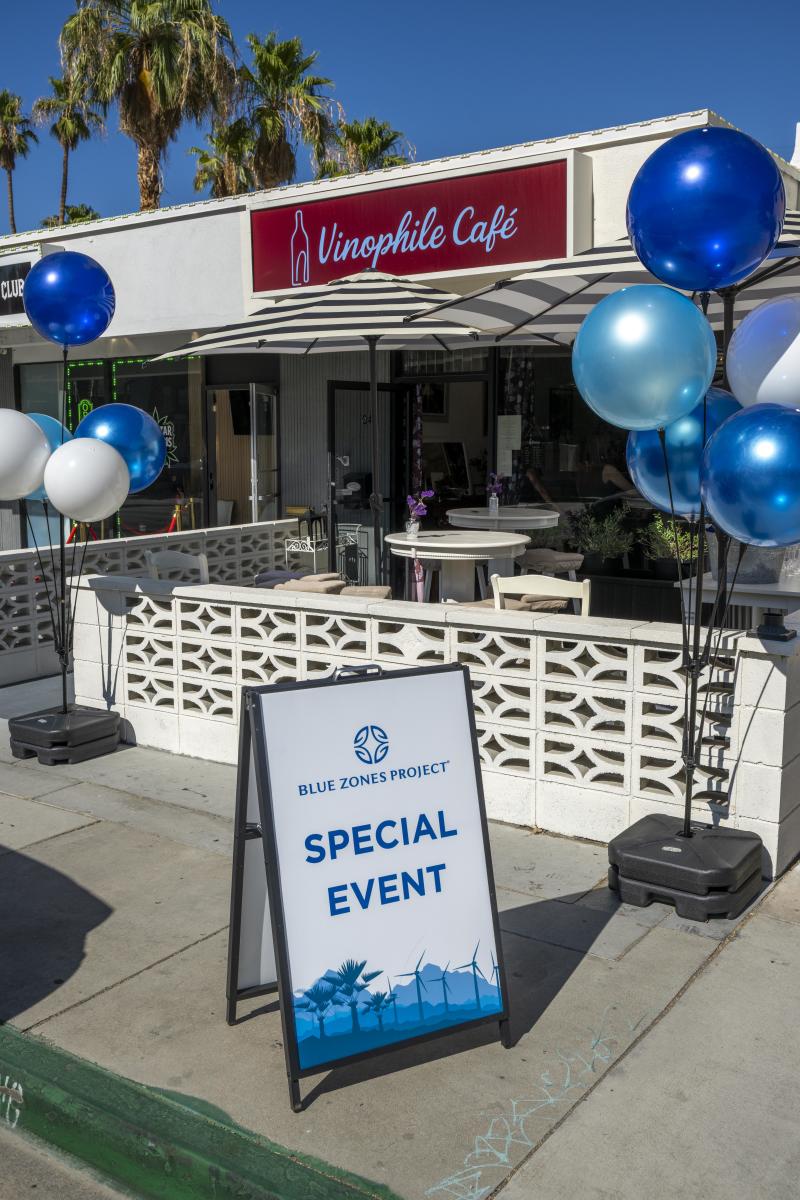
At Vinophile Café – a Blue Zones Project approved restaurant, healthy eating becomes a memorable experience rather than a sacrifice. Plant-forward cuisine, genuine hospitality, and meaningful conversation demonstrate that restaurants can nourish both people and community while responding to the growing demand for healthier dining experiences.
These businesses may serve different customers, but they all illustrate the same principle. Investing in people is also an investment in business.
What a Well-Being Economy Looks Like
One of the ideas I've been exploring through my doctoral research is what I call the purpose-profit dilemma. Entrepreneurs often feel pressure to choose between creating social impact and achieving financial success. Yet the businesses that appear most resilient recognize that these goals don't have to compete. By improving people's lives, they create stronger brands, deeper customer loyalty, healthier workplaces, and more sustainable businesses.
Purpose and profit become partners rather than competitors.
That is a message our Blue Zones Project Palm Springs team shares every day as we work with current and future partners. Well-being isn't separate from business success—it can be one of its greatest competitive advantages.
This is what a well-being economy looks like.
A Vision for Palm Springs’ Future
As Palm Springs continues to attract entrepreneurs, new and diverse workforce, families, retirees, visitors, and creative professionals, our competitive advantage will not rest solely on our climate or our tourism economy. It will increasingly depend on the community we build together.
The next chapter of economic development won't be measured only by the number of businesses we recruit or the amount of investment we attract. It will also be measured by whether we create a place where people genuinely want to build their lives—where businesses thrive because people thrive.
Through Blue Zones Project Palm Springs and the growing network of local businesses, nonprofits, schools, neighborhoods, and community leaders embracing this vision, we have an extraordinary opportunity to become a leading example of what a well-being economy can achieve. Because we strengthen small businesses and organizations, grow our economy, and create a community where everyone has the opportunity to thrive.
Within the destination of Greater Palm Springs, two cities are home to Blue Zones Project initiatives: Palm Springs and Coachella. Click here to learn more about Blue Zones Project Palm Springs, and click here to learn more about Blue Zones Project Coachella.