

While it's easy to assume that Greater Palm Springs, known for celebrity retreats and the Coachella Valley Music and Arts Festival, has little to offer Black travelers seeking culture, community, history and heritage, the reality is more layered.
Visitors may be surprised to discover that African American organizers, professionals and entrepreneurs have shaped this desert oasis for generations and continue to do so to this day, making Greater Palm Springs a place Black people are proud to call home, and one where travelers from any background feel welcome to visit.
Keeping Black History Alive
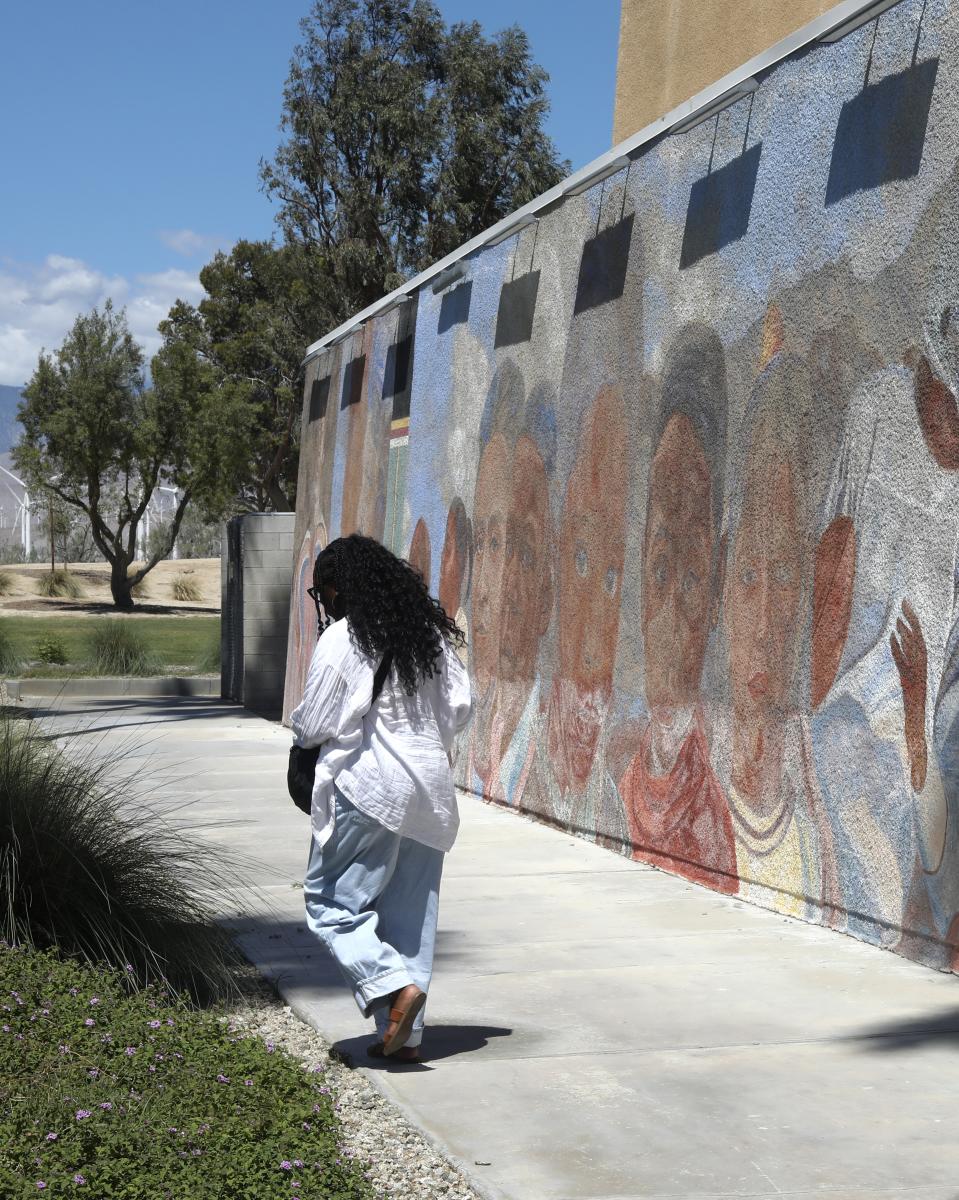
This is made abundantly clear during the Urban Palm Springs Black History Tour, a narrated excursion where Deiter Crawford deftly navigates the city's neighborhoods sharing lesser-known narratives about this travel hotspot. A re-entry counselor, community organizer and father, Crawford comes from a family that was among the first to migrate to Palm Springs from East Texas in the 1940s.
“When people come to Palm Springs, they’re always like, ‘Are there Black people out there?’” he chuckles. “So I came up with the idea for the tour to tell our story. I just want to pay it forward to all those people that came before me in this neighborhood who did great things. I want to keep that legacy alive and pass on the oral history that was told to me over the years from our families.”
It’s a wild ride — not because of how Crawford drives or the traffic in Palm Springs, but because of both the tragedy and triumph that live in every place you visit on the tour.
Glimpsing the rubble and remnants of Section 14, the first Black neighborhood located in the heart of downtown Palm Springs, Crawford reflects on the beginning of a painful and persistent pattern of displacement that disconnected the community his grandparents and other elders had carefully cultivated.
Heading south towards Cathedral City, he points out the midcentury modernist architecture Palm Springs is known for, and speaks at length about the many ways the city has long benefited from the skill, artistry and service of African American men, like Paul R. Williams and Lawrence Crossley, working in real estate development. Winding its way along Golf Park Drive, the tour heads toward Crossley Estates, an African American neighborhood established in the late 1950s that Crawford describes as one of the most important real estate development projects in Black Palm Springs history.
Stopping to greet family and friends going about their day, he explains just some of the many challenges the neighborhood has faced in preserving its place in Palm Springs. The ease in each exchange with his neighbors reveals how comfortable they are with Crawford’s role as the community’s griot, gathering and sharing their stories of struggle, survival, stability and success with people from around the world.
Steering the van north to somewhere just outside city limits, the San Jacinto Mountains looming large in the distance, white windmills circling in the bright blue cloudless sky, Crawford grows excited as he explains the reclamation happening here in Desert Highland Gateway Estates. Now the neighborhood with the largest share of Black residents in Palm Springs, this enclave, which prominently features an 18-acre park, the James O. Jessie Desert Highland Unity Center, and four longstanding, midcentury modern-style Black churches, endures.
Crawford sees the Black History Tour as a crucial component of the community activism that has anchored and uplifted his community for five generations.
By educating visitors about the challenges local Black communities have faced, he hopes to preserve their stories while creating greater understanding of the people and neighborhoods that have helped shape Greater Palm Springs. For Crawford, sharing that history is also a way to honor those who came before him and ensure their contributions remain part of the region’s story.
Leading From the Front
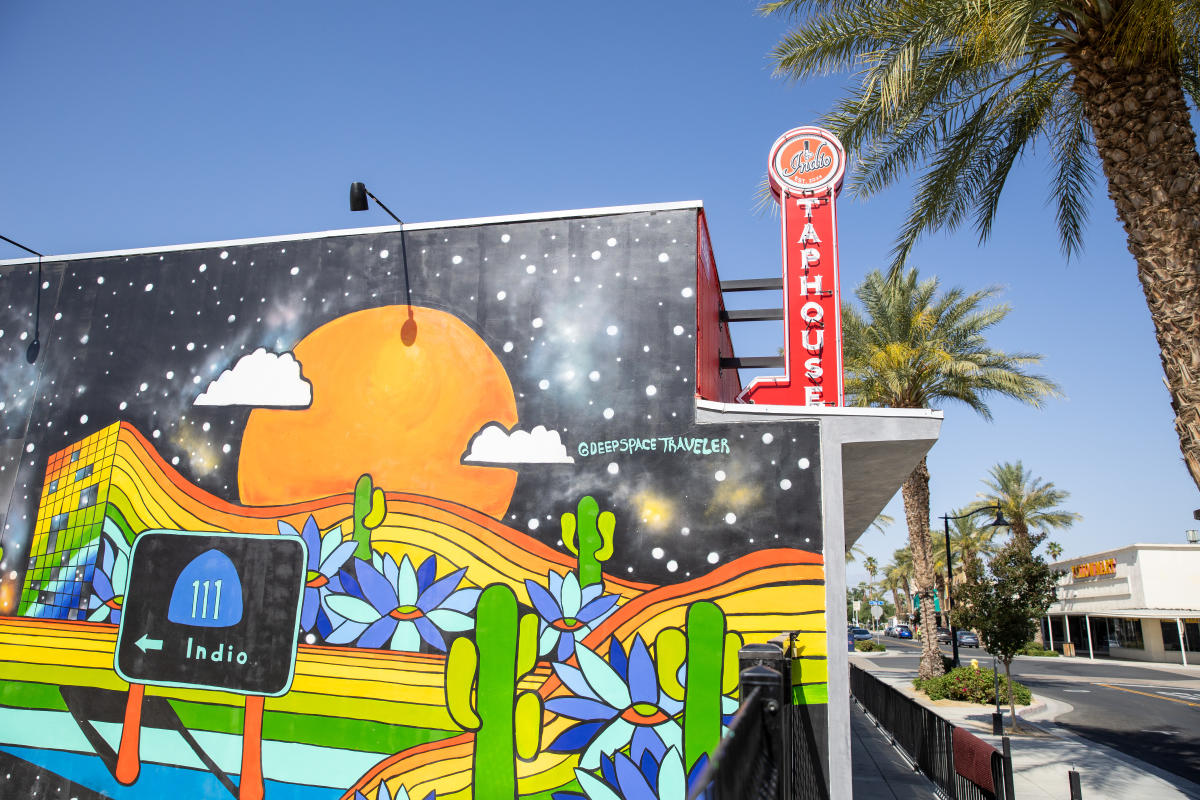
Like Crawford, Indio’s Mayor Pro Tem Waymond Fermon grew up in Greater Palm Springs and has witnessed, and helped usher in, significant growth in his hometown. Today, Indio welcomes visitors from around the world for major events including the Coachella Valley Music and Arts Festival and Stagecoach Country Music Festival.
With almost a decade of council-member experience, Fermon, the only African American elected official in Greater Palm Springs, says resolving the long-standing tension between residents’ needs and visitors’ interests continues to be on his mind, heart and agenda as he campaigns for re-election.
Fermon knows that tension well. “Sometimes our residents are like, ‘Why you got all these people here?’” he says, describing the several times each year when travelers from around the globe converge on the City of Festivals.
“And I tell them, ‘I want to do everything I can from the policy side to support our people here. I want to create opportunities for our youth and young people to come back and work. We want people to stay here and have their businesses here, because the more revenue Indio generates, the more money we have to rework our roads, offer community grants and lower utility costs.’”
As Fermon looks forward to his next council term, he hopes to right some of the wrongs that lie at the heart of the tension. Emboldened by the recent revitalization of Indio’s downtown district and the upcoming opening of a 40-acre outdoor sports complex, Fermon now has his sights set on the long-vacant Indio Grand Marketplace mall: “The number one thing I have left on my bucket list is to develop that property,” he says.
When the mall’s owner sought to expand its footprint in the late 80s, Indio’s government used eminent domain laws to force Black families out of the nearby John Nobles Ranch neighborhood, an area established more than fifty years earlier when the neighborhood’s namesake, the first known African American landowner in the Coachella Valley, began selling and renting parcels of land to migrant Black families.
Though residents sued the city for relocation reparations and won, the mall expansion never materialized, leaving residents to live with the pain of pointless displacement for almost forty years.
Fermon was just nine years old when Nobles Ranch residents were forced from their homes, schools, churches and businesses. Growing up in Indio in the 80s and 90s, the aftermath of that displacement — violence, limited job prospects, incarceration — left many of his generation with few reasons to stay out of trouble or stay in their hometown.
With a family to feed just a few years after graduating from high school, Fermon found himself propelled into a profession he hadn’t really considered, one that people in his community sometimes took issue with — law enforcement.
Still, he believes his nearly thirty years of professional experience as a correctional officer at Calipatria State Prison, paired with his personal experience as one of Indio’s native sons, provide him with important perspective and essential skills for government leadership.
Perhaps more importantly, Fermon recognizes in himself a willingness to work on behalf of his hometown and its residents, a role he says he’s always felt ready to fill. “Honestly, I think some of us are put here to be in important positions. I represent this city, but I can’t represent the city from the back. I have to be in the front, and I’m not afraid to be out front.”
He describes the many city, regional and state committees he’s been appointed to where he’s tasked to create resources, services and programs that buoy local businesses, make good use of the city’s real estate, and better bridge the gap between those who live, work and play in Indio.
For Fermon, working in public service empowers him to ensure Indio’s investments have the greatest impact on the residents and local business owners who contribute something much more valuable than revenue — they shape the culture and character of Greater Palm Springs.
Creating Space for Wellness and Belonging
And when small businesses like The Good House become the go-to hotel hideaway for the likes of Megan Thee Stallion, it only reinforces the region’s reputation as a world-class resort destination where travelers from all walks of life can converge to create memorable moments.
Located in Desert Hot Springs, Good House guests can stay in one of seven rustically refined king-sized rooms, enjoy plant-based snacks and beverages, and relax with wellness treatments, yoga and copious amounts of soaking in the large, blue-tiled natural mineral springs pool.
Owner Brian Edson says he never planned to operate a hospitality property. “I was scared to lean into the Black-owned hotel thing,” he admits. “I didn’t want to be front facing at all. I didn’t want to be famous, I just wanted to do good business and hang out and if guests meet me, cool, if not, whatever. In fact, one of the things that I said when we first started, was ‘Don't tell people I'm the owner.’”
Even so, he understands how The Good House, like Crawford’s Black History Tour, and Fermon’s role as a civic leader, is an extension of a lineage and legacy his family has been building for generations.
Born and raised in Pasadena and Altadena, Edson’s grandfather and mother owned and managed rental properties across Los Angeles throughout his childhood. Despite his youthful disdain for working in the family business, in 2014, he began flipping houses in L.A.’s Highland Park, a neighborhood overtaken by blight and gang violence.
Though risky in many ways, as Edson persisted in his efforts to redevelop homes and house families, he noticed his venture was starting to draw attention, resources and investment to the area. Perhaps more importantly, he recognized how stewarding underinvested spaces into places people can call home is a powerful way to offer leadership to a community.
“Because I don’t have the skills to build a house, I have to hire on people, and I become an economy,” Edson says. He spouts off a list of more than a dozen types of businesses, from electricians and plumbers to mortgage brokers and landscapers, that make money in the process of redeveloping a home. “I fed people’s families, and once I realized the impact that I was having, I loved that I was doing that,” he smiles.
While housing shapes livelihoods, hospitality shapes a traveler’s experience of the place they visit. Though initially reluctant to represent a supposed shift in the resort culture Greater Palm Springs is known for, Edson has since realized that The Good House, through its online presence, on site parties, and his attentive and intentional engagement with guests, is helping to redefine who gets to revel in elevated wellness experiences.
“I want my legacy to be providing some sort of a reprieve for people. I want to make them feel good. For us to be able to create a space that people feel like it’s their second home, which I’ve been told countless times, has been really special,” Edson reflects.
“People ought to feel well no matter how old, how young, Black, white, purple. If you want to get this wellness, come get it. If you want to get this relaxation, come get it. Wellness has no demographic,” he insists.
A Legacy That Continues
Creating that feeling of home is a hallmark of how place-makers like Edson, Fermon and Crawford are shaping spaces where people can cultivate memory, belonging and opportunity, places where they see themselves both reflected and respected.
Now, nearly a century after its emergence and expansion, a visit to Greater Palm Springs can be an invitation to experience the incredible and indelible influence of Black imagination, stewardship and leadership on the identity and industries that make the Coachella Valley an internationally recognized travel destination.