In Greater Palm Springs, wellness has always been part of the language — sun-drenched pools, resort spas, steam rooms, the promise of rest you can actually feel in your nervous system. But something has been shifting across the nine-city valley. The newest version of “feeling better here” is less about escaping life and more about syncing with the desert itself.
BREATH, WIND, AND NERVOUS SYSTEM RESET
Breathwork has moved from a niche wellness offering to a core part of the region’s broader desert reset culture. It sits alongside spa rituals and movement classes but feels more internal than experiential. It’s what happens when the body is given structured space to settle, process, and release.
At Elements In The Desert, that shift takes form under the guidance of energy medicine practitioner Susan Dunn. With more than 35 years in bodywork and holistic wellness, Dunn frames breathwork as a tool for emotional and energetic release, shaped in part by her own turning point following a significant health event that led her to reorient her practice around healing from within.
“Transformation doesn’t always look dramatic. Sometimes it’s a person who has spent years carrying the weight of everyone else’s expectations and suddenly realizes they can put that burden down,” says Dunn. “I’ve watched people move from fear to courage, from self-judgment to self-compassion, from confusion to clarity—all within a single session.”
Sessions are led indoors at studios such as GATHER and Live Well Clinic in La Quinta and Del Webb in Rancho Mirage, or on Zoom, using guided breath patterns paired with sound and sensory elements to draw attention inward. Rather than emphasizing performance or intensity, the work focuses on what surfaces when the nervous system is slowed and supported: stress patterns, stored emotion and tension that participants often describe as releasing over the course of the practice.
And while breathwork sessions with Dunn are held indoors, she still believes being in the desert plays a large role in each session’s impact. “The desert itself has always felt like a place of reflection, stillness and transformation. People come here to slow down, to heal, to reconnect with themselves,” says Dunn. “There is something about being surrounded by vast open space, mountains, and quiet that naturally invites people inward.”
YOGA AS A RITUAL, NOT A ROUTINE
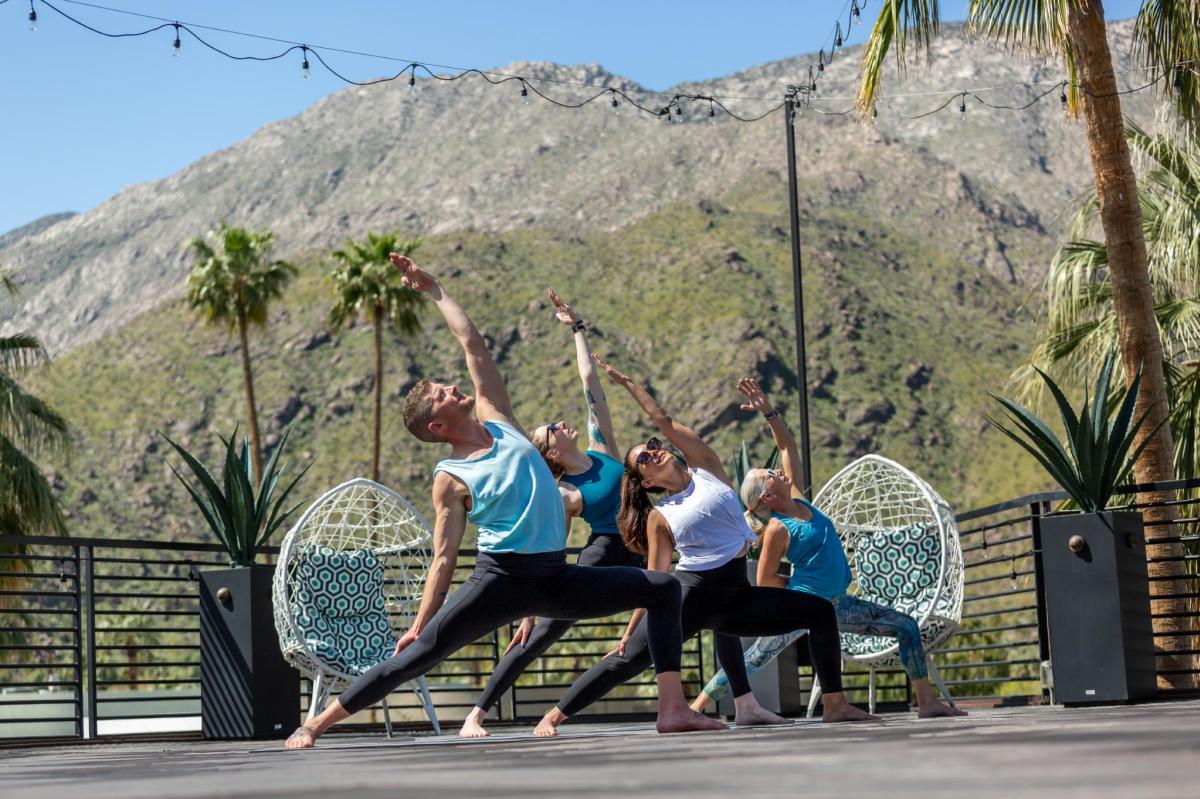
That same sense of environmental participation carries into movement practices at places like Parker Palm Springs. Here, yoga isn’t framed as fitness optimization so much as ritualized stillness—an intentional pause inside a landscape that already slows you down if you let it.
As part of the hotel’s spa programming, complimentary yoga sessions are offered on Saturday and Sunday mornings at 10 a.m., folding movement into the rhythm of a stay rather than positioning it as a separate pursuit.
The setting does much of the work. Tucked within the estate’s gardens and courtyards, the practice feels shaped by architecture as much as instruction—low walls, layered greenery and hidden corners that soften attention without demanding it. It’s less about exertion or performance than it is about arriving into stillness already in progress.
THE ORIGINAL WELLNESS TECHNOLOGY: WATER
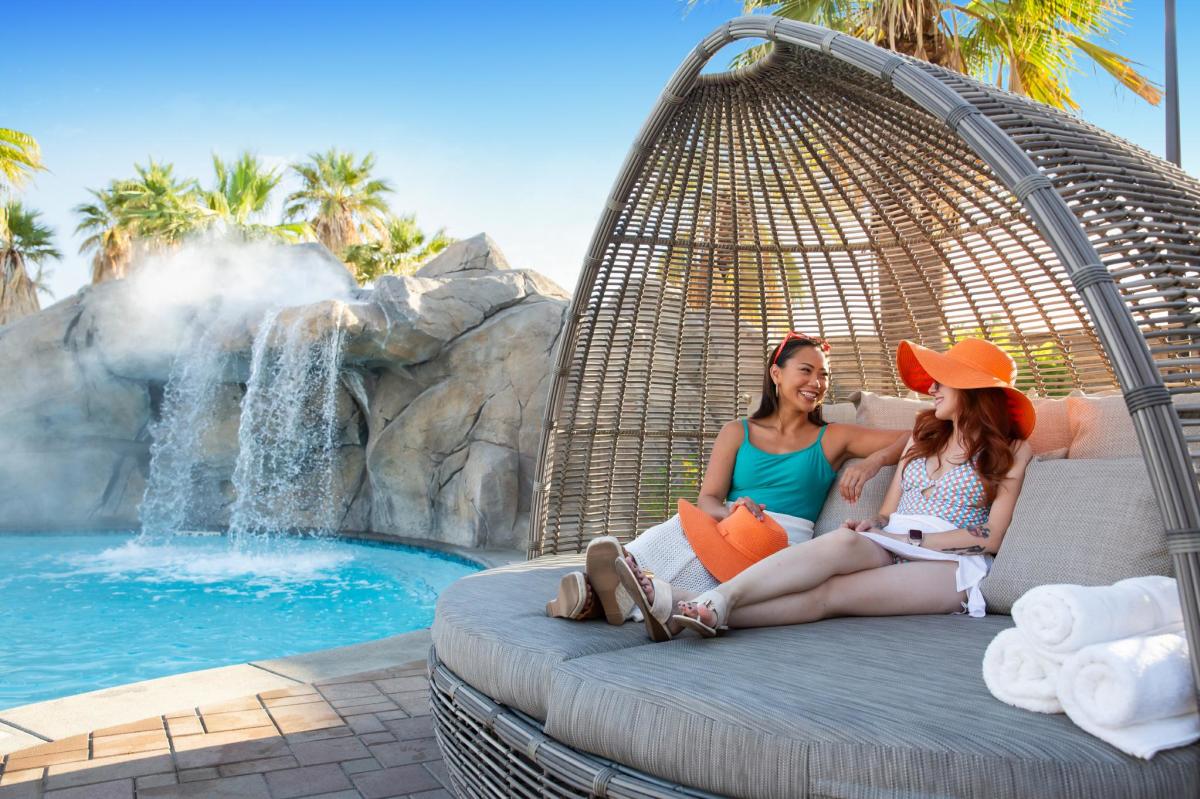
Long before wellness became a lifestyle industry, the Agua Caliente people understood this valley through its hot mineral waters. That history is central to understanding today’s wellness landscape, especially at The Spa at Séc-he in downtown Palm Springs, where contemporary spa design is built around the same geothermal spring that shaped centuries of Indigenous life.
At The Spa at Séc-he, taking the waters begins with immersion. Guests submerge in a mineral-rich soaking bath fed by the Agua Caliente Hot Mineral Spring, meant to encourage relaxation and circulation. The water itself carries a long history. Known as Séc-he, “the sound of boiling water” in the Cahuilla language, the hot mineral spring has been central to the Agua Caliente Band of Cahuilla Indians for thousands of years. Fed by rainwater and mountain snowmelt that collects underground before emerging after an estimated 12,000-year journey, the spring served long before resort culture arrived: as a source of drinking water, bathing, irrigation, and ceremony.
Spanning more than 73,000 square feet, The Spa at Séc-he layers wellness offerings beyond the spring: a waterfall pool, halotherapy salt caves, flotation therapy, massage and body treatments, facials, wellness lounges and shaded spaces designed for rest between appointments. Even newer wellness practices—infrared therapies, sensory experiences, and recovery-focused treatments—are framed around the geothermal source that anchors the property.
LONGEVITY SCIENCE, DESERT STYLE
A newer layer of desert wellness borrows from global longevity research, translating “Blue Zone” principles into something experiential. At the JW Marriott Desert Springs Resort & Spa, the idea surfaces not only through curated wellness menus at Spa Bistro, but through treatments designed around the world’s five recognized Blue Zones, regions associated with longer, healthier lives.
Meals lean plant-forward and hydration-conscious, framed less as restriction than routine: foods meant to support energy across days, not just moments. Spa rituals echo the same thinking. An Okinawa-inspired rice clay wrap centers calm and balance, an Ikaria olive oil massage draws from Mediterranean traditions of rest and connection, and a Loma Linda microgreens facial reimagines skincare through nourishment and restoration.
Treatments correspond with regionally inspired dishes at the Spa Bistro—an Okinawa bowl layered with sweet potato glass noodles and miso-honey vinaigrette; a Mediterranean bowl of couscous, kale, dates and artichokes; citrus and avocado tied to California-inspired wellness. Here, wellness is framed less as a reset and more as a practice of consistency.
TEMPEH, SEITAN, AND STAYING POWER

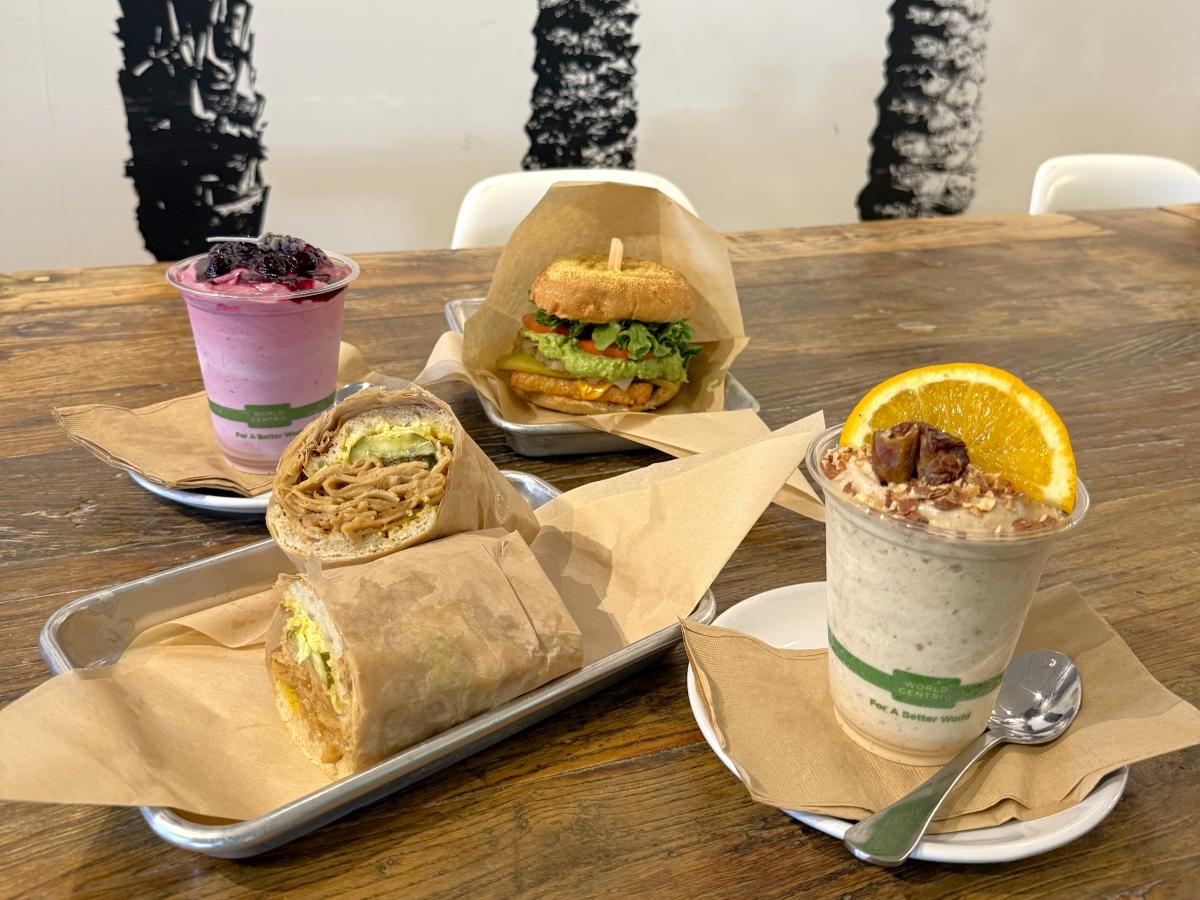
That philosophy continues to take shape at Chef Tanya’s Kitchen. Long before meat alternatives became mainstream, founder Tanya Petrovna began producing tempeh and seitan in the Coachella Valley, eventually expanding the operation into a takeout deli and marketplace built around foods designed to nourish without feeling austere.
Signature dishes like the Cubano, Chupacabra, and Tempeh Power Burger reinterpret comfort food through house-made proteins, while grain bowls, wraps, and fresh juices make plant-forward eating feel accessible rather than prescriptive. Wellness here arrives casually, folded into lunch rather than ritual.
“It just feels better at the end of the day. It feels better than meat, it feels better than processed food,” says Petrovna. “It’s just the real stuff, right from the source.”
In a region often associated with spa culture and retreat experiences, Chef Tanya’s offers the suggestion that feeling better might be built through repetition—the meals people return to, the habits that settle into ordinary life.

STILLNESS AS A SIGNATURE EXPERIENCE
What ties all of these threads together—breathwork, ritual movement, mineral water traditions, Indigenous knowledge and food built for longevity—is not a single philosophy, but a shared relationship to place. Wellness in Greater Palm Springs is less something practiced than something absorbed.
This desert oasis asks for attention, not acceleration; for presence, not performance. Warmth, silence, distance, and sunlight do what no curated experience fully can; they slow the body down until it starts to match its surroundings.