

Blog created in partnership with the Meet the Mentor Program. Gabrielle LaRochelle visited Greater Palm Springs in April and shared her experiences below.
When most people think of the Southern California oasis of Palm Springs, they imagine sun-kissed swimming pools, the hidden retreats of Hollywood stars, and palm trees swaying in the breeze. Yet behind this glamour lies a rich cultural history that goes far deeper than its stylish midcentury architecture and celebrity allure. Palm Springs was shaped from determination, not just celebrity status. The visionaries who transformed Greater Palm Springs into a healing destination space and built communities from scratch did so against the face of exclusion. This is the story of how Palm Springs became a home shaped not by fame, but by the work of many, from healers and hoteliers to entrepreneurs and community builders who believed in the destination's promise.
Nellie Coffman – Hostess of the Healing Desert
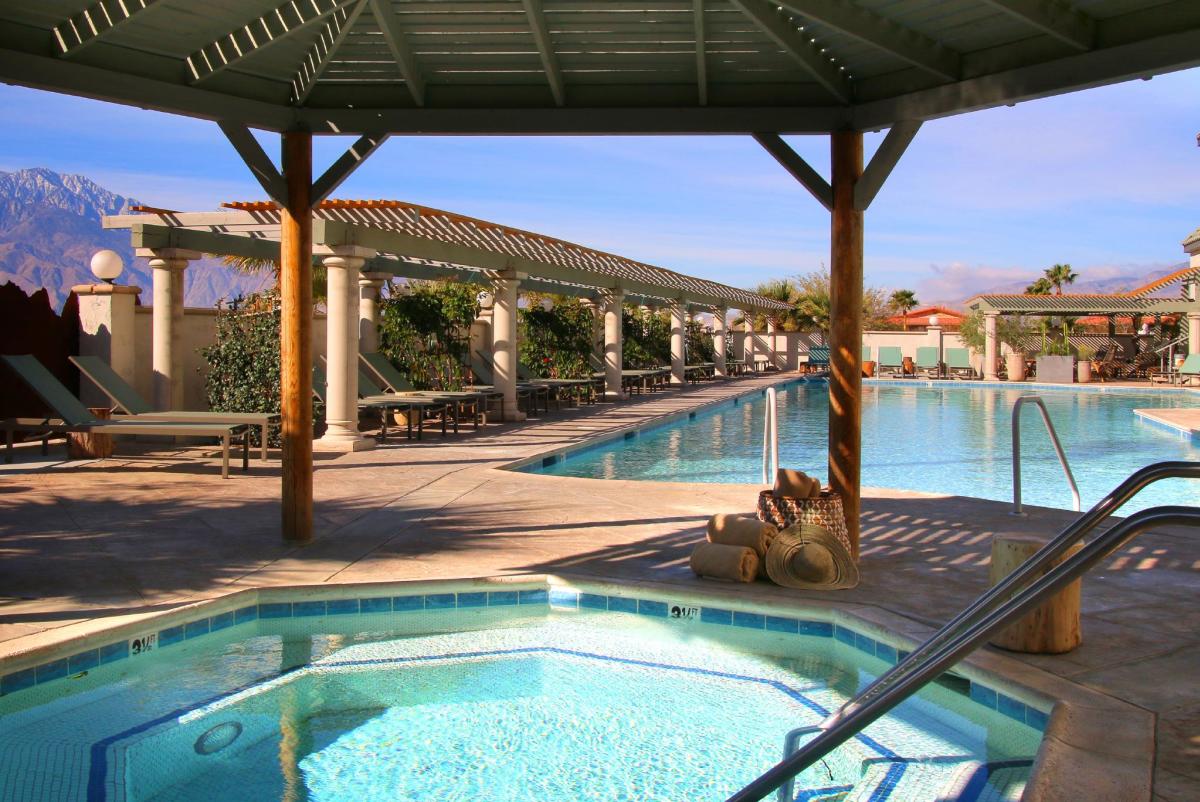
Azure Palm Hot Springs Resort & Day Spa Oasis
Palm Springs’ reputation as a wellness destination began with pioneer Nellie Coffman, who founded the Desert Inn in 1909 when she and her husband, Dr. Harry Lee Coffman established a hotel and health sanatorium to treat people suffering from respiratory diseases. Nellie built a new kind of destination in the desert, turning what was then just a small village (the city wasn’t officially incorporated until 1938) into a place where people came to rest, recover, and start again.
Her modest inn evolved into a Spanish Mediterranean Revival-style resort with a central courtyard pool, a design that many believe she helped popularize. The Desert Inn gained popularity through Nellie's growing reputation as a gracious host and pioneer in desert hospitality. Soon, celebrities and artists followed, turning Palm Springs into the glamorous escape it’s known as today. Nellie Coffman was so respected in early Palm Springs that she was invited to cut the ribbon at the La Plaza complex in 1936. While she didn’t fund the complex, her presence reflected the deep trust and admiration the community had for her.
The wellness vision Nellie created continues to inspire modern resorts today. The historic Casa Cody, founded by fellow early settler Harriet Cody, and modern sanctuaries like Azure Palm Hot Springs Resort & Day Spa Oasis, maintain Nellie's original approach to unite rest with design and desert energy into a complete wellness experience. Visit the poolside lounges, healing hotels, and sunlit spas of Greater Palm Springs, and you’ll find her imprint everywhere.
Lawrence Crossley Palm Springs’ Unsung Mogul
By the early-20th century, Palm Springs was becoming an exclusive resort town, but that exclusivity didn’t extend to everyone. During the 1950s, Nat King Cole, Sammy Davis Jr., and other Black entertainers were barred from staying at nearby hotels and resorts because segregation laws let businesses legally turn them away. Lawrence Crossley, a Black businessman, refused to let racism stop him from realizing his dream of building a thriving Black community in Palm Springs. In the late 1950s, Black families were being forced out of Section 14, where they had built homes on tribal land leased under federal oversight. When he saw families being pushed out, Crossley stepped in. Leveraging his entrepreneurial skills, he became a real estate developer and created Desert Highland Gateway Estates, one of the only neighborhoods in Palm Springs where Black families could own homes. As the first Black landowner in the area, he made it possible for Black families to buy homes in places they’d once been shut out of.
Today, Crossley’s legacy lives on through the Crossley Road thoroughfare, the neighborhood that bears his name, the James O. Jessie Desert Highland Unity Center, and a vibrant collection of murals that celebrate Black history, creativity, and community in throughout the city. You can experience that legacy on the Urban Palm Springs Black History Tour led by fourth generation resident, founder, and CEO Deiter Crawford. The tour takes visitors through Desert Highland Gateway Estates, Crossley Corners, and local faith-based institutions that played a key role in shaping the neighborhood. Along the way, you’ll learn about influential figures like famous architect Paul Revere Williams who designed spaces at the Town & Country Center, Palm Springs Tennis Club, and parts of the El Mirador Hotel complex, now Desert Regional Medical Center. It’s a powerful way to understand Palm Springs through the stories of the people who helped build it and a chance to see a living legacy that continues to grow.
Palm Springs was shaped by women, visionaries, and people determined to belong. Discovering the names often left out of its history allows visitors to truly appreciate the layers of meaning woven into this place. The healer who reimagined the desert as a space for renewal and the businessman who opened doors to opportunity and equity invite us to see Palm Springs through a richer, deeper story. These stories live beyond Hollywood’s spotlight, enduring in the landmarks, in the landscape itself, and in the quiet pride of the locals who continue to carry them forward.